
Designing loyalty for multi-location chains
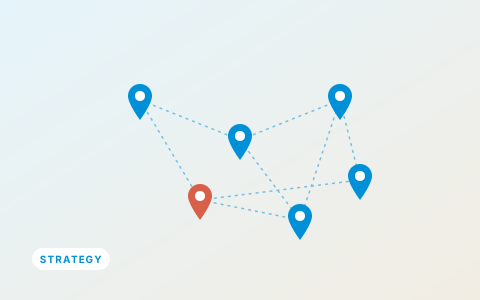
A program that works at 1 store and 50 stores looks completely different. Three architectural decisions decide whether multi-location loyalty scales.
1. Centralize the customer, federate the offers
The customer profile (name, points, history) lives in one place across all locations. But which campaigns run at which branch can vary by manager. This balance is non-negotiable: if every branch can edit the customer record, you get duplicate accounts and chaos. If no branch can run local campaigns, you lose the reason franchisees buy in.
2. Decide your reward cross-redemption policy upfront
Can a customer earn points at Branch A and redeem at Branch B? “Yes” feels right but breaks margin if branches are separately owned (franchisees). Most chains land on: points are universal, gifts are issued where earned. Document this; it’s the source of most multi-branch arguments.
3. Build a “branch performance” dashboard from day one
Without it, you can’t see which branches are using the program and which aren’t. Branches that don’t enroll members will undermine the program by under-rewarding their own customers. Visibility creates accountability.
The loyalty program is the only system that customers see across branches. Get it right and you have a brand. Get it wrong and you have 50 different brands wearing the same logo.
Multi-site programmes have one more thing to settle before 28 February 2027: the KVKK principle decision on loyalty cards requires verification at the till, and it has to work the same way across 3 branches and across 50. We compared the methods and the seconds each adds at the register in KVKK verification rules for loyalty cards.