
Strategy 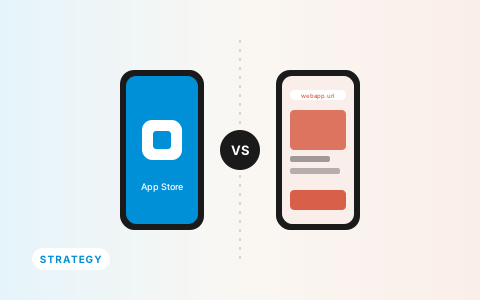
Mobile app or WebApp: when each makes sense
Every loyalty program has the same fork: mobile app, or web-based app (WebApp / PWA)? The wrong answer can cost you 30% of your potential members. Here’s how to choose.
Mobile app advantages
- Higher engagement, users who install are 4–6× more likely to interact monthly
- Push notifications work without consent friction
- App Store presence is a credibility signal
- Better for programs with daily or weekly engagement (food, fitness)
WebApp advantages
- Zero install friction, share a link, customer is in
- No App Store approval cycle
- One codebase, one update flow
- Works for everyone immediately, including iOS users without storage
When to choose mobile app
- High-frequency category (coffee chains, fast-casual where members visit weekly)
- 50+ locations and a marketing budget to drive installs
- Members who already use loyalty apps elsewhere
When to choose WebApp
- New programs where you’re still proving the concept
- Lower-frequency categories (salons, spas, occasional retail)
- Multi-channel businesses where customers come in through QR codes, links, or referrals
The right answer is often “WebApp first, mobile app later.” Validate that members actually want to engage before asking them to install something.
The Webapp gains one more advantage in 2027. The KVKK principle decision on loyalty cards requires verification at the till, and a QR code from the Webapp is one of the methods the decision names as an example, without asking the customer to install anything. We covered the requirement and what each method costs in KVKK verification rules for loyalty cards.